0%

Choosing the China Best Stainless Steel Smart Ring Supplier requires more than comparing factory prices. A reliable supplier should prove its experience, engineering capability, and quality controls with clear evidence. Look for 316L stainless steel options, stable sensor performance, tested battery life, and practical water resistance. Factory audits, ISO 9001 documentation, and traceable inspection records also matter.

Oura CEO Tom Hale has described the ring as “the most intimate form factor for a wearable.” That idea explains the product’s appeal. A ring stays on the finger during sleep, exercise, and daily work. However, comfort can fail quickly. A sharp inner edge, poor coating, or inaccurate sizing can turn a premium product into an expensive return.

The best Stainless Steel Smart Ring supplier should provide functional prototypes before mass production. Ask for sample reports, firmware demonstrations, charging tests, and data protection procedures. Confirm whether the factory owns its tooling and controls final assembly. These details reveal more than polished product photos.

Cost remains important, but the lowest quotation may hide weak sensors or unstable production. No supplier is perfect. Even experienced manufacturers can miss a coating defect or delay a firmware fix. That is why independent inspections, staged payments, and written acceptance standards are valuable. A careful sourcing process protects brand reputation and customer trust. This guide examines Chinese manufacturers through those practical standards, while recognizing one uncomfortable truth: attractive specifications do not always equal reliable performance.
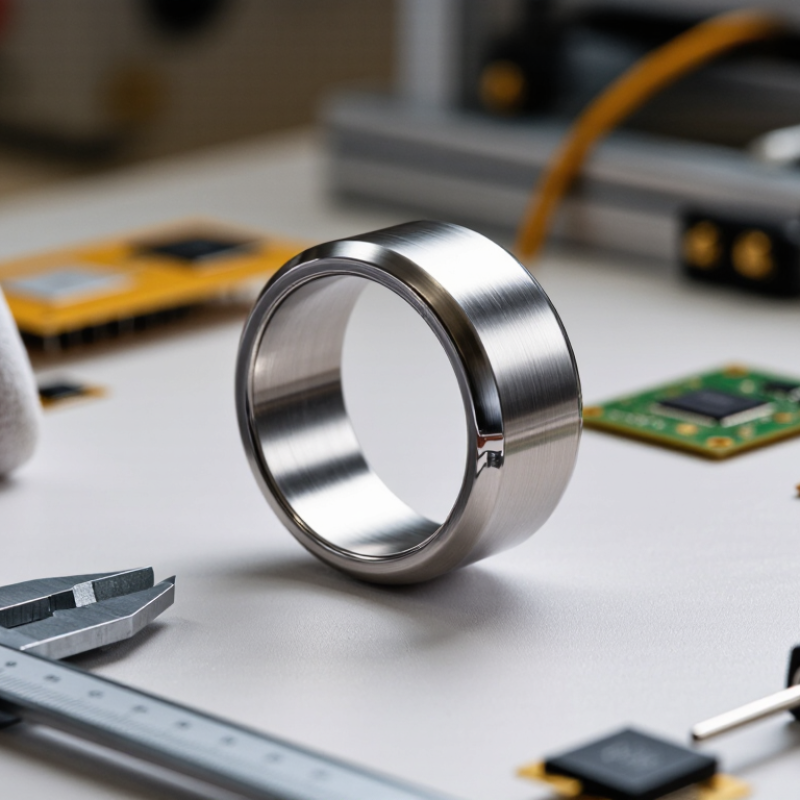
China Best Stainless Steel Smart Ring Supplier?

What Makes a Stainless Steel Smart Ring Supplier the Best in China

What makes a stainless steel smart ring supplier the best in China?

It is not simply a polished product page or a low quotation. Grand View Research estimates that the global smart ring market will expand at a strong double-digit rate through 2030. This growth raises expectations for comfort, sensor accuracy, battery stability, and after-sales support. A reliable supplier should explain these limits clearly, rather than promise impossible performance.

Material control is a practical test. The supplier should identify the stainless steel grade, coating process, and skin-contact safety documentation. Factory audits should review incoming materials, CNC tolerances, sealing tests, and final inspection records. For example, each ring should be checked for charging contact alignment and water-resistance consistency. Reports from IDC also show continued growth in wearable device shipments, increasing pressure for stable production and shorter development cycles. A capable engineering team can provide prototypes, test samples, and measurable revision records.

Communication matters more than many buyers expect. The best supplier assigns a technical contact, shares inspection data, and explains failure rates honestly. No supplier is flawless. I would still request an independent sample test before placing a large order. Ask for battery-cycle results, app compatibility details, packaging specifications, and production capacity evidence. Certifications such as RoHS and relevant ISO-based quality procedures strengthen credibility, but paperwork alone proves little. Factory experience, traceable testing, and consistent delivery reveal the real standard.

Key Features of Stainless Steel Smart Rings

Stainless steel smart rings combine a solid feel with discreet health tracking. In product evaluations, 316L stainless steel often performs well against daily scratches and skin contact. Its weight also gives the ring a reassuring, watch-like presence. However, comfort depends on surface finishing, inner curvature, and accurate sizing. A polished exterior looks refined, while a smooth interior reduces friction during sleep and exercise. Small details matter.

Core features usually include heart-rate monitoring, sleep analysis, activity tracking, and temperature sensing. Reliable models should explain sensor limits instead of promising medical-level accuracy. A clear companion application should show readable trends, not confusing charts. Battery performance is another practical concern. Several days of use can be convenient, but charging habits still affect real-world reliability. Water resistance helps with handwashing and light swimming, although it should match the stated rating.

Data protection deserves equal attention. Buyers should check how measurements are stored, transferred, and deleted. Strong encryption and transparent permissions build trust. From a supplier’s perspective, quality control should include sensor calibration, charging tests, coating checks, and repeated water-resistance inspections. Certification documents can support credibility, but they do not replace independent testing. No ring is perfect. I would still question sleep results after irregular travel or intense exercise. The best stainless steel smart ring balances durable construction, useful insights, comfortable sizing, and honest technical communication.

How to Evaluate Chinese Smart Ring Suppliers

Choosing a stainless steel smart ring supplier in China requires more than comparing catalog prices. Start with the factory, not the sales presentation. Ask for the legal company name, production address, and recent factory photographs. A video tour is useful, but an independent audit provides stronger evidence.

Request a physical sample before discussing large quantities. Check its weight, surface finish, charging contacts, sensor alignment, and comfort after several hours. Ask whether the steel is 316L or another grade. Require material certificates and test reports from recognized laboratories. Also review battery safety documents, waterproofing results, and radio testing records. Documents matter.

Examine the supplier’s engineering process. Can it explain sensor calibration, firmware updates, and quality checks for every batch? Ask for defect rates, repair procedures, and packaging standards. A reliable supplier should provide clear answers, not vague promises. Confirm production capacity using a small pilot order. Watch delivery accuracy and communication during this stage. Small details reveal habits.

Price can mislead. A cheap ring may use weaker plating, inconsistent sensors, or limited after-sales support. No checklist is perfect. I would still recheck critical claims through samples, records, and third-party inspection. Clarify ownership of molds, software, and custom designs in writing. Compare at least three suppliers using the same technical requirements. A polished sample alone proves very little.

Manufacturing, Quality Control, and Certification Standards

China Best Stainless Steel Smart Ring Supplier?

Manufacturing, Quality Control, and Certification Standards

A dependable stainless steel smart ring supplier should begin with controlled material selection. The steel grade must match the ring’s skin-contact and durability requirements. Incoming coils need material certificates and traceable batch numbers. Surface finishing also matters. Uneven polishing can cause visible lines, sharp edges, or coating failure after repeated wear.

During production, experienced teams inspect dimensions, welding points, charging contacts, and sensor alignment. A ring may look perfect but still contain hidden assembly faults. Sample testing should include sweat exposure, button or sensor cycling, water resistance, drop testing, and charging safety. Production records should connect each finished unit with its inspection results. Small details matter.

Certification evidence must be specific and current. Suppliers should provide reports for relevant electrical, radio, material, and battery requirements in the target market. Common references may include ISO 9001 systems, RoHS and REACH material controls, and market-specific radio testing. However, a certificate alone proves little if its model number differs from the supplied ring. I would check the laboratory, test scope, issue date, and production version.

No factory is flawless. That is worth admitting. A useful supplier explains failure rates, corrective actions, and retest procedures without hiding weak data. One practical concern remains: testing a prototype cannot fully represent mass production. Regular factory audits and random batch inspections are still necessary. Reliable manufacturing depends on evidence, not polished promises.

Ordering, Customization, and Supplier Support Options

China Best Stainless Steel Smart Ring Supplier?

Choosing a stainless steel smart ring supplier requires more than comparing prices. Ask for material specifications, sensor details, battery information, and production records. A reliable supplier should provide samples before accepting a large order. Inspect the ring finish, inner comfort, charging contact, and app stability. Small flaws often appear during real use.

Customization may include logo placement, ring sizes, colors, packaging, firmware language, and companion app settings. Confirm the minimum order quantity and tooling fees in writing. Request a clear sample approval process. I once underestimated packaging changes, and the final box needed extra testing. That delay was avoidable. Supplier support should cover quality checks, replacement procedures, technical documents, and communication after delivery. Response speed matters when a sample fails.

Tips: Ask for a factory audit or recent inspection report. Keep one approved sample as a reference. Test several sizes on different fingers. Confirm data security practices and regional compliance requirements. Do not trust perfect promises. Compare evidence. Good support is measurable through clear answers, documented timelines, and practical solutions when problems occur.

China Best Stainless Steel Smart Ring Supplier? - Ordering, Customization, and Supplier Support Options
Evaluation Dimension Typical Stainless Steel Smart Ring Offering Customization and OEM/ODM Options Typical Commercial Terms Recommended Supplier Support Checks
Material and Finish 316L stainless steel is commonly used for the outer ring because it offers corrosion resistance and a durable polished surface. Inner surfaces may use medical-grade resin, ceramic, or polymer components. Brushed finish Mirror polish Matte coating Laser engraving Finish samples should normally be approved before mass production. Custom tooling may require a separate tooling charge. Request material specifications, surface-treatment details, salt-spray or corrosion-test information, and photos of approved samples.
Available Ring Sizes Common production ranges are approximately US sizes 6–13, although the exact range depends on the internal electronics and battery layout. Custom size ranges, size-marking methods, inner geometry, and sizing kits may be developed for a specific project. Each additional size can affect tooling, antenna tuning, battery capacity, and minimum order quantity. Confirm an official size chart, inner circumference tolerance, sizing-kit availability, and fit-test samples before placing a bulk order.
Core Health Functions Depending on the model, functions may include sleep tracking, heart-rate monitoring, blood-oxygen estimation, skin-temperature tracking, activity tracking, and menstrual-cycle insights. Sensor combinations, data fields, measurement intervals, algorithms, and app dashboards can be configured for a target market. Health-related functions should be described as wellness features unless the product has the required medical approvals for a specific market. Ask for sensor specifications, test methodology, accuracy limitations, data-privacy documentation, and a live application demonstration.
Connectivity and Application Bluetooth Low Energy is the usual connection method. A companion mobile application is generally required for synchronization, analysis, firmware updates, and account management. Android and iOS application branding, languages, dashboard layout, cloud settings, API integration, and selected data-export formats may be customized. App development, cloud hosting, maintenance, and third-party integration are often quoted separately from hardware pricing. Check current operating-system compatibility, Bluetooth version, data ownership, software-update policy, server location, and API documentation.
Battery and Charging Rechargeable lithium-polymer batteries and compact magnetic charging docks are common. Actual battery life varies with sensor frequency, ring size, temperature, and firmware. Charging-dock shape, cable type, charging indicators, battery capacity, low-battery alerts, and packaging instructions can be customized. Battery-life claims should be based on a defined test profile rather than standby time alone. Air-shipping rules may apply to products containing lithium batteries. Request battery safety documents, charging-temperature limits, cycle-test results, transport paperwork, and a defined battery-life test report.
Water and Dust Protection Many smart rings are designed for water resistance, commonly targeting an IP rating or a manufacturer-defined depth and duration. Protection depends on seals, assembly, and testing. Gasket materials, sealing structure, test criteria, warning labels, and packaging instructions may be adjusted for the intended use case. A water-resistance claim should identify the exact test standard, rating, sample condition, and warranty exclusions. Verify independent or in-house test reports, production-line leak testing, warranty limitations, and whether swimming or diving is supported.
Ordering Process A typical process includes product brief, quotation, technical review, sample order, sample approval, purchase order, pilot production, quality inspection, and shipment. Buyers can usually request a custom specification sheet covering hardware, firmware, application functions, packaging, and labeling. Sample fees, tooling fees, deposit percentage, balance timing, shipping terms, and inspection responsibilities should be stated in writing. Select a supplier that provides a project timeline, named technical contact, revision record, commercial invoice, and pre-shipment inspection procedure.
Minimum Order Quantity Stock or semi-custom products may be available in smaller quantities. Fully customized hardware, packaging, or software normally requires a higher order volume. MOQ may be negotiated separately for the ring body, electronics, packaging, engraving, and application development. The quotation should distinguish sample quantity, trial-order quantity, and mass-production quantity rather than showing one combined MOQ. Ask whether mixed sizes and colors are allowed, whether inventory can be used for a pilot order, and how unused custom materials are handled.
Lead Time Standard samples may take several business days to a few weeks. Customized tooling, firmware, applications, and packaging can extend the project schedule. Lead time depends on design approval, component availability, certification, software testing, and the number of size or finish variations. The purchase contract should define sample lead time, pilot-production lead time, mass-production lead time, and delay-notification rules. Request a milestone schedule with approval gates for industrial design, engineering validation, software release, packaging, and final inspection.
Quality Control Relevant checks include appearance, dimensions, charging, Bluetooth pairing, sensor operation, battery performance, water-resistance testing, and packaging completeness. Acceptance criteria, defect classifications, sampling levels, inspection forms, and corrective-action procedures can be written into the quality agreement. Independent pre-shipment inspection is commonly arranged and paid for by agreement between buyer and supplier. Request a quality-control plan, production photos, batch traceability method, calibration records, and a corrective-action report format.
Compliance and Documentation Depending on the destination, products may require documentation related to radio equipment, electromagnetic compatibility, battery transport, chemical restrictions, consumer safety, and packaging. User manuals, labels, declarations, packaging marks, test samples, and technical files can be prepared for a target market. Certification costs and responsibility for renewal, local registration, and regulatory changes should be clearly assigned. Verify that documents match the exact hardware revision, model number, battery type, application version, and importing country.
After-Sales and Warranty Support may cover replacement units, firmware troubleshooting, application support, spare charging docks, and defect analysis. Service-level agreements, replacement policies, support languages, knowledge-base content, and regional service procedures may be customized. Warranty duration, covered defects, return freight, response time, and replacement thresholds should be written into the supply agreement. Prefer a supplier offering a dedicated support contact, ticket tracking, firmware version control, root-cause analysis, and documented escalation procedures.
Buyer Note: Specifications, prices, minimum order quantities, certifications, lead times, and battery-life results vary by configuration and destination market. Confirm all technical and commercial details with written samples, test reports, and a signed purchase agreement before mass production.

FAQS

What makes a stainless steel smart ring supplier reliable?

A reliable supplier offers stable quality, clear testing records, and honest communication. Low pricing alone proves little.

Which material details should buyers request?

Ask for the steel grade, coating method, and skin-contact safety documents. Confirm whether the ring uses 316L steel or another grade.

How can buyers inspect factory quality?

Request the legal company name, production address, and recent factory photographs. An independent audit gives stronger evidence than a video tour.

Why is a physical sample important?

A sample reveals weight, finish, sensor alignment, charging contact position, and comfort after several hours. Hold it. Wear it.

What technical tests should suppliers provide?

Request battery-cycle results, water-resistance tests, radio testing records, and sensor calibration details. Test reports should come from recognized laboratories.

How can buyers check production consistency?

Ask for batch inspection records, defect rates, repair procedures, and packaging standards. A small pilot order can expose delivery problems.

What questions should buyers ask about software?

Ask about firmware updates, app compatibility, data handling, and future maintenance. Vague answers suggest possible support difficulties.

Can certifications prove supplier quality?

Certifications strengthen credibility, but paperwork alone proves little. Match documents with samples, factory checks, and independent testing.

How should buyers compare different suppliers?

Compare at least three suppliers using identical technical requirements. Review quality, capacity, communication, and after-sales support together.

What details need written protection?

Clarify ownership of molds, software, custom designs, packaging, and inspection standards in writing. I would recheck every critical claim.

Conclusion

Choosing the best Stainless Steel Smart Ring supplier in China requires more than comparing prices. A reliable supplier should offer durable materials, accurate health and activity tracking, efficient battery performance, comfortable design, and stable software compatibility. Buyers should evaluate production experience, engineering capabilities, communication, sample quality, delivery reliability, and the supplier’s ability to support both standard and customized projects.

Strong manufacturing processes and strict quality control are essential for consistent performance. Suppliers should be able to provide clear testing procedures, traceable materials, and relevant product certifications for the intended markets. Before placing a large order, customers should review samples, confirm specifications, discuss minimum order quantities, and establish expectations for packaging, branding, app integration, and after-sales support. A professional supplier will communicate transparently, offer practical customization options, protect product quality throughout production, and provide responsive assistance from initial inquiry through delivery.


Clara

Clara

Clara is a dedicated marketing professional who combines strategic insight, clear communication, and a deep understanding of the company’s products. As a regular contributor to the company website, she creates informative blog articles that help readers understand product features, practical......